Wednesday, March 31, 2010

sibling whispers # ?: relix new psych mix


from a photograph by don snyder: ultraviolet / black light paintings, us co. church audiovisual temple, garnerville, new york.

The latest issue of (now) NYC based Relix magazine - originaly launched in 1974 as the definitive periodical for Grateful Dead and associated "exploratory music" from the San Francisco Bay Area - hits the newsstands this coming April with ruthlessly sustained coverage of the thriving New Psychedelic underground.

Sibling, Richard B. Simon - Scorp10n Bowl agitator and contributing Relix editor - seals the deal with a sparkling assembly of hallucinatory overload available online; a marathon two and a half hour playlist encompassing the fractured trip of Wooden Shjips to the full-on fractal chaos of Acid Mother's Temple.

A comprehensive exploration of space and time involving 24 disparate identities; cooperatives; and purposely obtuse finks.
My brotherhood.

Lend your ear here.

"Where you come from is gone.
Where you thought you were going to ?
Weren't never there."

▼ BIG STICK: DRAG RACING from "Drag Racing b/w Hell On Earth" 45 (Recess) 1986 (US)

Sunday, March 28, 2010

a pair of live deuces


Do not contort, extort or otherwise put yourself out. Make no commotion.

The serial MO remains intact, if a little interrupted. By lassitude or intrusion.

Chance.

Actually, it was a recent reader's comment which prompted me to dust off the keyboard and dig out a couple of dirty Brown covers entangled at the bottom of the laundry basket.

Soul Power Biological. Burns whiter than white.

No Yorker, James Chance featured here previously ON THE BLEACHERS regards his 1978 "Off White" recordings; mixed and engineered at Blank Tape Studios, NYC. One more pale Taurean on the cusp of a ram's horn - born plain James Siegfried in Milwaukee, Wisconsin on April 20th, 1953 - the James Brown fixation was self-evident from the start. 

A febrile, albino fusion of free jazz channeling. Co-opted out of the No Wave movement fronted by one-time collaborator, Lydia Lunch.

Stained sheets, indeed.

Despite all this, I was unaware of this pair of Brown and Rosen compositions covered in performance at a show in Paris on the 13th May, 1980. Thank you, Magnus. The LP was reissued on Ze Records, with alternative renditions of the same live set - recorded this time in Rotterdam, June 1980 - made available through the ROIR retrospective, "Soul Exorcism Redux" in 2007.

The initial godfather workout here - "I Feel Good" - is fairly pedestrian and of interest only as a statement of intent. A chance remark. Rosen's "King Heroin", though, delivers on a subcutaneous level informed by White / Chance / Black's own weakness for those "tiny white grains". As Magnus observes: "Standing in smack up to his knees". Or elbows. Where James Brown originally supplied a sermon built on caution and rebuttal, brother Chance returns it past the point of sale. An autographed admission prefaced by contorted alto saxophone.

A welter of contusions.

As performances go, it is claustrophobic. A stunted cousin of sorts to Television's Ork released "Little Johnny Jewel"; stripped of valve, electron gun, phosphor.

An empty glass envelope out of the box.

 James Chance: vocals, saxophone;
Al McDowell: bass;
Fred Wells, Patrick Geoffrois: guitars;
Lorenzo Wyche: trumpet;
Richard Harrisson: drums.

Recorded live Aux Bains Douches, Paris, 13/05/80.
Produced by Jacques Pasquier & James Chance.

▼ JAMES CHANCE + THE CONTORTIONS: I GOT YOU (I FEEL GOOD) from "Live Aux Bains Douches" LP (Scopa Invisible) 1980 (US / FRANCE)
▼ JAMES CHANCE + THE CONTORTIONS: KING HEROIN from "Live Aux Bains Douches" LP (Scopa Invisible) 1980 (US / FRANCE)

Monday, March 22, 2010

cidade de deus


Fernando Meirelles' "City of God"; an entirely different choreographed set piece from the last time Elton John's 1973 original featured here on SibLINGSHOT ON THE BLEACHERS.

Even though you might never have physically set foot in the favelas of Rio De Janeiro
, you will be acquainted with the routine savagery of a community left to police itself.

Its slow dive from more optimistic beginnings into socially engineered neglect.

With unschooled natural talent fostered in Vidigal and Cidade de Deus itself,
writers Paulo Lins and Bráulio Mantovani navigate us reluctantly deep into the festering heart of life on the hill. Its relentless cycle of nominal alliance and indiscriminate retribution.

Underpinned by Rocket's fascination for the camera, the lens leads us this way and that like truffling pigs. A city of children simultaneously bent on projecting a tenuous identity while walking in perpetual fear of exposure.

Benny's tale is just one more unravelled thread.


▼
THE BEASTIE BOYS: BENNY AND THE JETS from "Anthology: Sounds Of Science" CD (Grand Royal) 1999 (US)

Saturday, March 20, 2010

dim star


william alexander chilton: december 28th, 1950 - March 17th, 2010.

I am frequently the last to know.

Sometimes it might be better never to find out at all.


Allegedly suffering from complications of the heart, Alex checked into a hospital in New Orleans on Wednesday. He didn't make the return trip.

I have nothing more to add.

A Keith Reid and Gary Brooker composition.
Recorded at American Recording Studio in Memphis, Tennessee.
Produced by Dan Penn.

big star captured by john fry.

THE BOX TOPS: A WHITER SHADE OF PALE from "The Letter / Neon Rainbow" LP (Bell) 1967 (US)

Friday, March 19, 2010

fight the power


public enemy (top): paint on audio cassettes by sam
i havia.

"
There it Is", the second contracted LP release for Polydor, on the back of a distribution package encompassing Brown's King Records and People imprint, is something of an improvement on "Hot Pants"; notable only for the title track reworking of his supercharged 1971 smash hit.

A prequel, of sorts, to the soundtrack proper, "Black Caesar", and the Larry Cohen rejected "The Payback" which would emerge the following year, "There it Is" nonetheless delivers on its premise; from full on horn to the bleak Bobbit, Matthews, Brown and Rosen composition, "King Heroin", a wholly leprous condemnation conscientiously stripped of all concession.

Where Curtis Mayfield's "Pusherman" inspires a positive rhythmic response at odds with its core message, "King Heroin" is unstinting in its clarity.

That same theme is reprised on "Public Enemy No. 1" - parts one and two - but ultimately fails to engage on a similar level. Dropping all pretense at restraint, Brown strives to to find the right note twice and can't quite reach it. By part two, the song is mercifully engineered to a fade before it descends into pantomime.

The foot is stamping, the brow might be awash with sweat, but the performance rests on the wrong foot.

Still. Giving up and turning his cheek was never seriously part of James Brown's reportoire. Or Flavor Flav's.

Arranged and produced by Dave Matthews and James Brown.

▼ JAMES BROWN: KING HEROIN from "There It Is" 2 x LP (Polydor) 1972 (US)
▼ JAMES BROWN: PUBLIC ENEMY No. 1 (PT 1) from "There It Is" 2 x LP (Polydor) 1972 (US)
▼ JAMES BROWN: NEVER CAN SAY GOODBYE from "There It Is" 2 x LP (Polydor) 1972 (US)

Thursday, March 18, 2010

toil


Some people have little or no conception.

They are too removed from the physicality
of the knife going in. The twist or not,
if one is lucky; the bottle flailing stage left,
the fragment of glass in the corner of one
eye. They have no experience of the lust
to damage; maim; injure with blade. Stone.

Such creatures,
they feed and exist in a pretty cul-de-sac built
on crutches. Stumps. At a distance.

Where were you when they hammered in
the nail ? Where were you when Lazarus rose
to sit idle and brain dead in the sun ?

Sunday painters. Dismantlers of tertiary colour
tied up in a bow.
I wish I had your lukewarm appreciation for
zip, tat. The nothingness of bilge and cackle.

As it is. I sit and bang at the keys with one finger.

I am bitter as a paper bag of limes. Lemons.
Rind and pulp, dyspeptic acid. Carapuces
and crustaceans washed out on a single white
sheet.

I do not believe I appreciate the taste of you.
I don't think I'm familiar with the smell of you at all.

It takes much to penetrate my hard of hearing.
It takes plenty to buckle down and man the quiet
way in.

I believe in salt, seed, weed. The labour to spoil.

That is my working. That is my crease.
That is my reason to break into a run or rapture.

You had better be quick
to explain your myopia.

Wednesday, March 17, 2010

picasso ist blau


rude faust. so far sosna good.


Written by Rudolf Sosna.

Werner "Zappi" Diermaier : drums;
Hans Joachim Irmler : organ;
Jean-Hervé Péron : bass;
Rudolf Sosna: guitar and keyboards;
Gunter Wüsthoff: saxophone, synthesizer.

Recorded at Wumme, March 1972.
Produced by Uwe Nettelbeck.
Engineered by Kurt Graupner.

▼ FAUST: MAMIE IST BLAU from "So Far" LP (Polydor) 1972 (Germany)

stitched up


Consider this.


Epiphany.


An episiotomy in
Caerphilly.


Now.
Scunthorpe. That's
a different matter.
unpinned fodder for
misogynists.

cities of god


Originally issued on Rolf-Ulrich Kaiser's imprint, Kosmische Kuriere, under license to parent label, Ohr and marketed in Italy as PDU.

Kosmische Kuriere
- a vehicle, primarily, for Polol Vuh and Ash Ra Tempel - financed sixteen releases between 1973 and 1975, and a reissue of Fricke's soundtrack to Herzog's "Aguirre" in 1982.

Popol Vuh derives from the corpus text - Book of Community - originating in Guatemela: a Mayan narrative, its central themes cover the creation myth to cosmology and genealogy, prior to the Spanish conquest. Documented by the Dominican priest, Francisco Ximénez (born in 1666) some years after his arrival in the New World in 1688, all modern editions stem solely from those 18th century transcripts, "mostly written in parallel Quiché and Spanish".

There is no definitive book of counsel.

From "Beatitude", a Florian Fricke composition with guitar by Conny Veit.

Conny Veit: guitar;
Daniel Fichelscher: guitar, drums, congas;
Robert Eliscu: oboe;
Florian Fricke: piano; keyboards (Cembalo);
Klaus Wiese: tambura.
Recorded at Baumburg (Altenmarkt) & Stommeln (Cologne).
Produced by Popol Vuh and Reinhart Langowski.


▼ POPOL VUH: TANZ DER CHASSIDIM from "Seligpreisung" LP (Kosmische Kuriere) 1973 (Germany)

Tuesday, March 16, 2010

i steal with a cool hand. look


The Warner Bros. financed "I Am a Fugitive From a Chain Gang" - adapted from Robert Elliott Burns' autobiographical account, as serialized in pulp magazine, True Detective - provoked public disquiet and brought the failings of the US penal system into focus.

Nominated for three Acadamy Awards in 1932, while Burns continued to serve out his sentence in New Jersey state, the film's commercial and critical success fueled debate, if not fundamental reforms. As a consequence of civic pressure - fanned by press reports of similar miscarriages of justice on a seemingly grand scale - a significant increase in appeals capitalized on this climate change; a record number of 'chain gang' inmates were granted parole and early release, interstate.

That is not to suggest that pardons were forthcoming. Jurisprudence is not so easily bent on confessing to error.


i am a fugitive from a chaing gang. then and now.


While Burns himself walked in 1933, it should also be observed that Georgia warden, J. Harold Hardy - his character lambasted in the film - successfully sued the studio for "
vicious, brutal and false attacks".

Like Muni disappearing into the dark in the final reel, the words "I steal..." trailing on a leash, the prison system publicly exonerated itself and retreated from flashbulb and spotlight. Stepping back into the long shadow behind bullhorn and pump action shotgun.

The rows concealed behind razor wire and fence.


The following overblown 'confessional' was originally culled from a post carried on Record Robot. Seemingly a vanity project - recorded in San Diego, CA and owing more of a debt, perhaps, to "Cool Hand Luke" - it nonetheless shambles, chained, in the footprints of Robert Elliott Burns. And, by tenuous extention, in the brusque foreword or afterword of Dashiell Hammett and Jim Thompson; themselves some time contributors to Bernaar Macfadden's True Detective.

"Pulp", of course, was the title - fittingly - of Charles Bukowski's last 'novel'. Published in 1994, just ahead of his death. In it, the role of narrator's voice passes from the familiar - Henry Chinaski - to private investigator, Nicky Berlane. "Pulp" punctuates the end of an era. And similarly 'celebrates' what Bukowski defines as "bad writing".

Bukowski may or may not have been justified in digging out an axe to grind. Genre writing, so far as I am concerned, is no better or worse merely for its author's pursuit of the rent; alimony; necessities or vices. It is what it is.

Me. I think he was just poking fun. Kicking back with the dicks for laughs.

I have no clear idea whether Floyd, here, is genuine or not. I suspect the latter.

He most definitely feels he has an axe to grind.

Ignore the window dressing. The pomp and chorus of pickaxe and shovel. The library music. Acquaint your ears, instead, with the private disinterment of a man falling in and out of his cups.

And the tarnished legacy of Robert Elliott Burns.

Raise a glass to the spurious or simply ill considered.

A sequel of sorts, it appeared first on SibLINGSHOT ON THE BLEACHERS in July, 2008. Nothing much changes when all's said and done.
▼ FLOYD McCLELLAN: I AM AN EX-CONVICT FROM A FLORIDA CHAIN GANG from "I Am An Ex-Convict From a Florida Chain Gang" LP (Sagitario) 1978 (US)

Thursday, March 11, 2010

the fugitive


paul muni: september 22 1895 - august 25 1967.


Paul Muni - fugitive from a chaing gang; jewish scarface - fell
into the world on September 22nd, 1895. Haunted by pogroms.
Hiding on the streets of Lwow, Poland. Beset by boys with sticks.

A Hollywood grail of bullets. He faded in the Summer of Love.

My great-grandfather - on my mother's side - was also from Lwow.
Before it was swallowed by Ukraine. His wife was one of the first
road fatalities in Poland. Just as the motor car made its appearance.

My own grandfather journeyed half way round the globe via the
Black Sea and the Suez Canal. Bartering with arabs. Trading dry
goods purchased here and there with rubles from the Soviet army.
He fled Lwow in a hurry. At seventeen he saw no future in it.

Presently, he stepped foot on British soil. I am unclear on the detail.
He is no longer here to corroborate or embroider on it, but it
was certainly here that he met my grandmother. He was enlisted
into the 1st Polish Independent Parachute Brigade in Scotland. They
lent him a gun and dropped him out of an aeroplane over Arnhem.

He was not keen on that either, but he knew better than to argue.

By outrageous good fortune, he made it back to his adopted home.
His elder brother, Stanislaw, fared less well. A dapper wit, skillful
with pencil and sable brush, he perished in the extermination camps.
A younger brother, I believe, was spirited away to a Gulag in Siberia.

Of course. My grandfather remained unacquainted with the facts
until much later. Years of hopeful correspondence turning cold;
slowing to a dutiful trickle as letter after letter disappeared in the void.

He grew weary and forgetful. Outwardly, at least.

And so. When word came at last, slipping through the letterbox with
no more than a whisper, he found he was no longer on close terms
with the script marching across each page. Or the launguage of loss.

After persevering, he carefully laid down his reading glasses and
settled back in his chair. Tuning the dial without expression as a young
Paul Muni danced onto the screen and bailed out under fire.

Thursday, March 4, 2010

bleeding out. between the covers


damned damned damned. in an orange peel plastic wig.

Well. A promise is a promise.


This time last week, a bunch of reprobates gathered at the drop in clinic which is sometimes the comments section on SibLINGSHOT ON THE BLEACHERS. And got to bandying words on the subject of definitives, counterfeits, and perennially indulged placebos. Cover versions of good standing, in short.

A karaoke chorus of the weary and/or addled; inexplicably resuscitated under a ragged flag.

Snowballing - literally - out the fists of an exuberant Warden, a few choice calls promptly escalated into a free-for-all. A gaggle of voices joining the fray. Only one of them still anonymous.

And so it was, finally, Nazz Nomad who hurled down the gauntlet: his proposal that the bretheren engage in a loose cooperative, a transatlantic puddling of resources to nominate some kind of "top ten". Now. I am not even nominally drawn to numbers. I have a deep aversion to all things arithmetical. And. I refuse to participate in the disordered spectacle of a beauty pageant. Anyway. What might be 'No. 1' in my personal hit parade today, will almost certainly slip down the charts by tomorrow.

Besides. Who would wish to loiter even close to 'No. 10' ? Gordon Brown, maybe. And that just proves my point.

The faintest trace of claret and everything knee deep in the red.

Still. I did sign consent. It was only on reading the small print that it occurred to me that I'd been 'duped'. All these f@ckin' rules.


And who's to say Nazz might not just be yankin' my chain ?

That's the thing about operating on European Time. The onus, by default, requires the 'old world' proceed first into battle. Caution to the wind. Arses to the Channel. The Americans turn up on the beaches only at the last.

Sergeant Bilko to our Corporal Clegg. Pulling on Cuban cigars. Parading in bespoke uniform just as the krauts are getting pummelled on the eastern front.


Taken by the tradesman's entrance.

Actually. All this 'Dud's Army' sniping is merely a stalling device. I have no idea in the slightest where to go from here. The weight of those decent covers already provided is stifling.

I'm bleedin' out.

I thought I'd already screamed for help. It must've fallen on shellshocked ears.


▼ THE DAMNED: HELP from "New Rose b/w Help!" 45 (Stiff) 1976 (UK)

Wednesday, March 3, 2010

son of captain blood


rat patrol on remote control. fort bragg.

A choice cut from what was originally envisioned as the double LP, "Rat Patrol from Fort Bragg". Produced by Mick Jones prior to the in party squabbling which saw the raw material being passed to Glynn Johns, and whittled back to one double sided slab of vinyl, singular.


Four songs, famously, were subsequently expunged on decommission - "Cool Confusion"; "First Night Back in London"; Beautiful People"; and "Kill Time" - none of which concerns us, critically, here.

The story of Sean Leslie Flynn, is convoluted and mired in rudely propogated evidence and anecdote.

The sole legitimate heir of swashbuckler, Errol - as a consequence of his marriage to Lila Dimita - Flynn Jr. was born in Los Angeles, California in May, 1941. After consenting to have the camera locked on him vicariously aged just fifteen, in the tv show "The Errol Flynn Theatre", Flynn Jr. swiftly turned his back on Hollywood in the wake of his father's demise and exited stage left to Africa. To try his fortune, rather predictably, as safari guide and big game hunter.


He promptly decided his skills were better employed behind the lens.


Sean Flynn arrived in South Vietnam in 1966, five years shy of thirty. Casting himself in the role of free-lance photojournalist, his images were brokered and published in the leading international magazines of the day: including Paris-Match and Time-Life. Flynn Jr., heroically reported as wounded 'in action' after a parachute jump in which he injured his knee, moved on to cover the Arab / Israeli war of 1967 before returning to Vietnam to document the uniformly condemned Tet Offesive of '68.

The twenty-seven-year-old was roundly celebrated in the feld, and still unable to flee the patriachal shadow.

From Wiki:

"On April 6, 1970, while travelling by motorcycle in Cambodia, Flynn and Dana Stone (on assignment for Time magazine and CBS News respectively) were captured by communist guerrillas at a roadblock on Highway One. They were never heard from again and their remains have never been found."

I vaguely recall a Sunday Times article from the late 80s, where significant coverage was given to Flynn's Paris apartment being legally disinterred after some twenty-five years in absentia. Sean Flynn was not declared 'legally' dead until 1984, three years after being immortalized in "Combat Rock". Such are the formalities. The dust infested trove behind closed shutters bore testament to a fittingly bygone era; those photographed artefacts - a shield of zebra skin, a yellowed ivory tusk - encapsulating not just French colonialism, but the ghost of Captain Blood as icon.

Even in death, the celluloid spectre of Errol Flynn was a mere half stop away.


photographs, top, and immediately above: allan grant, may, 1961.


▼ THE CLASH: SEAN FLYNN from "Rat Patrol From Fort Bragg" 2 x LP Master (Bootleg) 1981 (UK)

tricky fingers: bring me the dub glove of bunny lee


Bunny Lee's succinct dub take on Dillinger's "No Business" - ranked "Mind Your Own Business" on "Talkin' Blues" - from side two of the Weed Beat issue of "Ranking Dellinger: Superstar". Sans vocal, and quite possibly all the sweeter.

Featuring The Aggrovators. Recorded at Channel One. Remixed and engineered at phase two of King Tubby's Home Town Hi-Fi.

Something short of three minutes of pure THC clarity.


▼ RANKING DELLINGER: A BUSINESS DUB from "Superstar" LP (Weed Beat) 1977 (Jamaica)

Monday, March 1, 2010

spoiler alert: channel one for the road


here's to early retirement. and ukuleles.


And not a G-Man from here to the border.

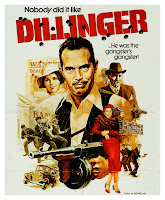
"This set was voiced at King Tubby's studio in may [1977] for producer Bunny Lee. I was lucky enough to be at Tubb's on one of the nights, Bunny arrived in his rather beat up yanky [sic] car with Dillinger, Trinity and Jah Stitch, ready for an all night session. Dillinger entered looking dapper in a blue track suit with a pair of shoes tied by the laces slung around his neck. Dillinger greeted Jammy who looked up and remarked on whether or not the footwear was new. Dillinger, sharp as a ratchet blade replied, 'Yeh man, me got me new shoes and the talking blues'."

- Dave Hendley: Blues and Soul; sleeve notes, "Talkin' Blues", Bellaphon.

"Talkin' Blues" - released to a somewhat indifferent reception after the huge success of Island's "CB200" and "Cokane In My Brain" - comes in two distinct flavours. Or wraps. The superior Jamaica Sound original (pictured top), and the Belgian reissue marketed simply as "Dillinger" ; hidden within a horrendous sleeve wholly at odds with King Tubby's crucial Home Town sound.

Released too in the UK on the Magnum label as "Talkin' Blues", so far as I can gather these dubs are culled from the LP originally issued on the Jamaican Weed Beat imprint - with additional material - as Ranking Dellinger's "Superstar". With rhythms recorded at Channel One from The Aggrovators, featuring all the usual suspects. A killer mash, ultimately, with Bunny Lee and Tubby at the controls.

Lester Bullocks, certainly, was inordinately fond of his Honda CB200. It seems fitting that it graces this LP too.

Brother Jon announced his retirement this weekend after driving for a living for close to forty years. Most recently for the Golden Gate bus company in San Francisco. This is it. He calculates he has clocked up over one millions miles; something approaching a million and one quarter. That is a lot of road.

I would like to wish him well. He has been plotting a somewhat epic voyage from the west coast up to the Olympian wastes of Canada and Newfoundland, I believe, for some time now . And farther afield. Weather and hockey permitting. His bags are packed; his passport is in order. Since he refuses to travel without his prized ukuleles, I very much doubt he will be going at it on motorcycle. In any case, he has his free ride for life. The option to sit back in relative comfort and led somebody else take the wheel for a change.

Who knows. Perhaps somewhere down the road we may yet get the opportunity to meet face to face. That would be cool.

This dub is not particularly apposite. I ought to have cobbled together something more celebratory - portentous even - but my attention has wandered a little this past week, meandering into marginally paranoid cul-de-sacs. Idling in cobwebs.

Blame it on my stalker. 

Add to which, I spent the better half of an hour this afternoon laid out in a dentist's chair. Nursing a hangover while the hygienist tutted and worked in my mouth with ill concealed contempt. Scratching away deep beneath the gumline with water jet and crochet hook, and no offer of anything approaching an anaesthetic. I think she has given up on me. The hygienist. I spat blood and left.

Anyway. Jon has impeccable taste. An ear for all manner of lost dub gems. This is one of them. One for the road. Just groove on the Tubbs and Lee. Jah Love.


 Written by Lester Bullocks.
Engineered by King Tubby and Prince Jammy
at King Tubby's Home Town Hi-Fi.

Mastered by Ken Mossue.
 Produced by Bunny Lee; remixed by Dojo Claridge.
With thanks to Still Anonymous for the tip.

▼ DILLINGER: JAH LOVE from "Talkin' Blues" LP (Jamaica Sound) 1977 (Jamaica)

Sunday, February 28, 2010

mind power: it is what it is


Continuing on the solid roll which began in earnest with 1972's "Get On The Good Foot", "The Payback" was Brown's critically acclaimed response to director Larry Cohen's decision to drop it as the soundtrack to his blaxploitation cash in, "Hell Up in Harlem". On the grounds that it just wasn't "James Brown enough".

Every inch as tightly oiled and sprung as Brown's superior "Black Caesar" soundtrack - the prequel - Cohen, clearly, must have harboured ulterior motives in declining the finished 'product'. That, or his brain was simply addled by all that white powder stepped on up in East Harlem.

Whatever Cohen's underlying issue with it, the title track itself - co-written with John 'Jabo' Starks - more than lives up to its bad ass reputation, post mortem.

A crime scene endlessly revisited in all manner of drive-by samplings, ongoing forensics continue to yield results. PhUnk. Black Punk spits all over Legs McNeil.

A full three years earlier.
 Written by James Brown, Fred Wesley and Charles Bobbit.
Recorded February to October 1973.

▼ JAMES BROWN: MIND POWER from "The Payback" 2 x LP (Polydor) 1973 (US)

Friday, February 26, 2010

burn in hell in white flame, motherf@cker


"BITCH"


"GO PLAY WITH YOUR BITCHES"

"WE KNOW ALL ABOUT YOU NOW DONT [sic] WE? ITS [sic] NOT ALL ABOUT YOU YOU KNOW"

"carry on with your threats to anyone/everyone. we all know who you are"

"ib are you really LOST? cause i thought you werent LOST. you mustnt [sic] put yourself down. get this into the real world - we're getting there."

Yes, folks. Just a few of the engaging witticisms directed my way these past couple of days. Jesus. You really couldn't make this kind of crap up.

And this strikingly perceptive summation:


"...i like that wood cut btw but yyyou [?] are a very angry person"

Anonymous, I'd like to say it's been swell knowing you. But. I'd be lying through my fuckin' teeth. Truly, I would.


If you really feel you must write again, be sure to do it in crayon.

You will find some pretty colours in the packet provided. The one with the farting Buddha all done up in pink.

Or Jay Cee on the lamb turned out like Charlton Heston.
 

We're all getting there, baby doll. It's just it takes some longer than others.


Recorded November 21st, 1961, Hollywood. Arranged by Don Costa.
Written by Erroll Garner and Johnny Burke.

photograph by richard kern.

▼ FRANK SINATRA: MISTY from "Sinatra & Strings" LP (Reprise) 1962 (US)

Thursday, February 25, 2010

needles, pins. more needles


tales from the ripped, y'hear ?

"The word punk goes back to the 1960's... I remember getting copies of NME in the summer of '75 and they were calling AC/DC, the Bay City Rollers and Eddie and the Hot Rods punk rock. I remember seeing a big article on Eddie and the Hot Rods saying, 'Here Comes Punk', but they weren't punk rock then, they were doing 'Woolly Bully'. Here in the States in 1975, Creem magazine would call anything remotely hard 'punk' and that included Alice Cooper, the MC5 and the Dictators."

- John Holmstrom, "Punk. A life Apart", Stephen Colgrave & Chris Sullivan, 2001.


"Lester had a lot of problems. He grew up a 7th Day Adventist, and replaced that with rock and roll. He was always talking at you, like a preacher. I brought Lester to see the Ramones, we would drag him out of the house kicking and screaming. He was a real curmudgeon, and it got boring, so we started saying things to piss him off, and we would break into his house and steal beer...

It was like being with somebody's father. But I liked Lester anyway. He really could write about rock and roll. He got a lot of things wrong, he was too politically correct, but I liked him. Creem magazine was responsible for turning a lot of people on to Iggy and the MC5. Lester turned a lot of people on to a lot of stuff. I think John even read about the Dictators in Creem. Lester got bitter though."


- Legs McNeil, interview with Helen Wilson, Glorious Noise, 2002.


"The name 'punk' came from me. John [Holmstrom] wanted to call the magazine Teenage News, which I thought was a stupid title. Years later, I found out it was from this unreleased New York Dolls' song. I didn't know this at the time. I just thought he was being stupid."

- Legs McNeil, "Punk. A life Apart", Stephen Colgrave & Chris Sullivan, 2001.
Arranged and produced by David Bowie.

Well. It might be from James Cagney I heard it first . Or even Edmond O' Brian. Who gives a shit. Maybe Lenny Kaye used it first to reference The Standells. Or Dave Marsh doing the same with ? and the Mysterians.

It sure as f@ck wasn't Legs McNeil.

"All The Young Dudes" was allegedly written off the cuff by David Bowie for Ian Hunter. After Mott The Hoople rejected "Suffragette City". While Mott's version may lack the shanked razor edge Mick Ronson provided on Bowie's own demo recorded after the fact, I still think Ian Hunter's vocal here ranks as the finest out the corner of the mouth tirade I've heard this side of John Winston Lennon.

With or without the gum.


Thanks to The Gazzetteer for the link to the Legs interview and the nudge. And Jonathan Richman apropos of nothing less than a bee in the ear.

▼ MOTT THE HOOPLE: ALL THE YOUNG DUDES from "All The Young Dudes b/w One Of the Boys" 45 (CBS) 1972 (UK)

Wednesday, February 24, 2010

julie's been working for the DWP


First there is a weekend strorm in a teacup concerning allegations that fat boy, Brown physically hauled junior staff out of their seats in a blind rage. Then, Chancellor, Alistair Dowling confides to Sky News that "the forces of hell were unleashed" from No. 10 when he first forecast the worst economic downturn in sixty years.

Well. The teacup is upset. Slapped out the master's hand; trampled into fine powder as the footwear begins flailing.

Both Scots, in the most tenuous definition of family, it is like waking up to find the creeps from the debating society have taken over the school canteen. By default. That their dads work for the KGB.


Bad enough when they first start dishing out the slop. Insufferable when the lorries stop rolling in and they turn on each other with knives and forks.

"Bleak House" by Mervyn Peake.

Tuesday, February 23, 2010

bleecker and drookit


I had no real idea who dunnit, but I came across it while 'shopping' for spoils from Allen Ginsberg's "Howl". This is not it.

From Wiki:

"[Eric] Drooker grew up in Manhattan's Stuyvesant Town, relatively close to the Lower East Side, which was then a working-class immigrant neighborhood with a tradition of left-wing political activism. Drooker developed an early interest in graphic arts and cartoons, particularly the woodcut novels of Frans Masereel and Lynd Ward and the underground comics of Robert Crumb."

The illustration - a woodcut, I believe, or something in lino with real fur trim - is from his 1992 collaboration with Ginsberg, "Illuminated Poems", published by Four Walls Eight Windows, NYC.

The last time I dallied with Ginsberg, Punk Rock and Old Pond, and the Nova Connection, it accompanied a line or two on tired facial hair. The pressing need to abolish the ugly. These days, I am a prickly peach. A potato gone to seed.

I f@cking hate telephones.

▼ ALLEN GINSBERG: I'M A VICTIM OF TELEPHONES (DEC. 1968) from "Disconnected: Dial-a-Poem Poets" LP (Giorno Poetry Systems) 1974 (US)

Monday, February 22, 2010

from sad syd to sid sack


not so much a scoop as a sunday afternoon dip.

The more tremulous amongst us will recall the laudanum tinctured scribblings of frock coated raconteur, Nick Kent.

For a sustained period in the 1970's, Kent was Lester Bangs' very English counterpart; waxing lyrical on the pages of the New Musical Express with a necromancer's eye for illumination every bit as keen as a freshly resurrected Richard Dadd.

A Victorian wastrel with an appetite for the sordid and burlesque.

So. I am scouring the Sunday papers, disaffected with usual compendium of bad news print, when I stumble across a spread with Vicious and Rotten bleeding out in saturated colour. Nick Kent has a new book out, "Apathy For The Devil", a 400 page annecdotal account servicing his fixation with the brightly burning and the dimmed. And the office machinations of a successful periodical at pains to capitalize on every passing fad.

I am less interested in the column inches allowed Julie Burchill and Tony Parsons than Kent's personal dealings with Malcolm McLaren, the Fagin of the 'old' King's Road. I watched Parsons recently on a celebrity Mastermind. His specialist subject was "Punk Rock: 1977 - 1979" and quite frankly, he was shit. The boy looked at Johnny and promptly forgot.

I digress. What was arresting in Robert Sandall's review of "Apathy For The Devil" - a ridiculous title; as absurd as my new masthead, brothers and sisters - is the coverage it gives to Kent's being drafted in by McLaren to teach the newly assembled Sex Pistols those rudimentary chords to a number of songs by The Stooges. Concerned, it would seem, that the journalist was an undermining influence, on Jones in particular, McLaren quickly instructed Glen Matlock to get rid of him.

To quote directly from Sandall's article, Kent was unperturbed:

"I was a middle-class druggie fop and they were working-class spivs who would steal the gold from their mother's teeth."

And that was that. Save for the fact that one year later, at the 100 Club, Kent was subjected to an "unprovoked bicycle chain attack" by Matlock's substitute. Stitched in place with all the glee our Malcolm could bring to bear.

So much skullduggery. Of course. By all accounts - and I do mean all - Simon John Ritchie posessed all the traits of an emotionally retarded playground bully.

Lacking any talent beyond the strictly photogenic, he always sappeared quick to step out from behind his bass to play to maximum applause. Smack the f@cker in the teeth and he'd back down. Lose your bottle and he'd pick it up off the floor and jam in it in your face.

And there lies the rub. If Nick Kent had not been stoned when everybody else was hoovering up the amphetamine sulphate, he might well have got the boot in first. Don't feel too sorry for him though. One good smack deserves another.

El Sid turned blue on heroin while his mother idled through his last convulsions. Right next door. Nick Kent lived to tell the tale.


There's a karmic symmetry to that.

And I'll wager Nick Kent never dashed his cat's brains out on the bathroom door.

NICK KENT'S "APATHY FOR THE DEVIL: A 1970s MEMOIR", pp408, @£10.99, FABER.

Sunday, February 21, 2010

some kind of hollocaust [reduxe]


A deceptive lull from the raging tempest of Amon Düül's abrasive 1969 debut; which on the whole is a splendid regurgitation of everything which made the Velvet Underground bad, dangerous and hard to get along with. Reheated over the coals of a collective opt-out which was, in truth, every father's worst fear.


Without exaggeration, the sound of the original Amon Düül is of communal exorcism. A vast communal dirge of tribal stomping; self eviscaration; and the channeling of the ancestral dead.

It should not be confused with the progressive experimentation of Amon Düül II, the splinter cooperative responsible for the Liberty issued "Phallus Dei" (in that same year); "Yeti" (1972); and a host of Planet Gong inspired studio embellishments and proto Lydonish utterances. Amon Düül, I, is what huddles at the source of the fictional "Nung" river of Kurtz's "Heart of Darkness".


"Kaskados Minneleid" is a pastoral recouping in the glow of the seventeen minute insurgence which is "Ein Wunderhübsches Mädchen Träumt von Sandosa", an uncontained riot presided over by shamans intent on invoking a violence the Velvet Underground were too aloof or listless to persist with. 

A primal trance where a deified Maureen Tucker watches over a bloodied sisterhood backlit by torches. Flesh for the vat. Flints in the ashes.

The original Amon Düül were responsible for just three releases between 1969 and 1971, culminating in "Disaster".

All three albums allegendly spring from one epic 'jam' recorded in 1968. A forth, "Paradieswaerts Duulis" - predating "Disaster", and released on Ohr in 1970 - is a wholly different regrouping comprising just three songs and seemingly recorded at a much later date; certainly after Amon D
üül's demise.

collectively:
Peter Leopold; Ullrich Leopold; Rainer Bauer; Ella Bauer; Uschi Obermaier; 

Helge Filanda; Angelica Filanda; Krischke; Eleonora Romana.

▼ AMON DÜÜL: KASKADOS MINNELEID from "Psychedelic Underground" LP (Metronome) 1969 (Germany)
DEJA BØNUS VU:
▼
AMON DÜÜL: EIN WUNDERHUBSCHES MÄDCHED TRÄUMT VON SANDOSA
from "Psychedelic Underground" LP (Metronome) 1969 (Germany)

Saturday, February 20, 2010

izzy wizzy, let's get busy


I may well have heard this modal reworking of the Rodgers & Hammerstein classic first performed not by John Coltrane but by Harry Corbett and friends. With puppets. The son of a Yorkshire coal miner, Corbett's early ambition to pursue a career as a musician was thwarted by deafness in one ear.

I wonder how this sat with Syd ? I like to think it might have been a favourite.

John Coltrane: soprano saxophone;
Steve Davis: bass;
Elvin Jones: drums;
McCoy Tyner: piano.

Produced by Nesuhi Ertegun, Engineered by Phil Iehle and Tom Dowd.
Recorded at Atlantic Studios, NYC, October 21st, 1960.


▼ JOHN COLTRANE: MY FAVOURITE THINGS from "My Favourite Things" LP (Atlantic) 1961 (US)

Thursday, February 18, 2010

zippo magic for eskimos and UFO's


columbia 45: DB8214

more paisley pattern than you can shake a staff at

A perfect 45. Peerless, and nearly 45 years since its original release, still wholly inimitable.


Involving all the studio trickery that producer, Norman Smith could muster in the early summer of 1967, the real magic of "See Emily Play" is in the song and its performance; the otherwordliness that an allegedly resistant Syd Barrett brought to bear on the recording session.

Childhood friend, David Gilmour - invited by Barrett to those very sessions - later went on record as saying this marked the point of the tipping of the scales and the first outward manifestation of Syd's withdrawl into secrecy and detachment. Ill at ease with what he considered a betrayal on Norman's part, Barrett was appalled by the sheer weight of the production values and retreated into the corner to lay down some traditional slide guitar. Whipping out a Zippo lighter in protest. Just to demonstrate how it ought to be done.


He appeared not to acknowledge Gilmour's intrusion. Or recognize him at all.

Much of what transpired during those sessions is anecdotal and uncorroborated. No paperwork exists in EMI's archive, and the 4 Track master reel was either wiped for subsequent reuse or lost entirely. Hence, the fact "See Emily Play" remains unissued as a genuine stereo remix.

Engineer, Jeff Jarrett's recollection is of an extended, meandering piece cruelly edited down by Smith for radio play; its bridges recorded at Syd's intended pace and doctored to pander to the prevailing zeitgeist. However intriguing, Smith's creative overruling - his determination, maybe, not to be outdone by George Martin - was inspired. A little short of three minutes, he achieves more here for the Pink Floyd than The Beatles ever did over both sides of their supremely overrated "Sgt. Pepper's Lonely Hearts Club Band".

Pink Floyd performed the song on three separate occasions in July, 1967 for the BBC, broadcast live on 'Top of the Pops". While it sealed international recognition for the band, Syd seethed at his being cast as a model pop idol in the same mould as so much industry fodder.

As I touched on in 2008, when contrasting both incarnations of the Pink Floyd:

"There is only ten years between them, like warring siblings, but a lot of water under the bridge. Pink Floyd's "Animals" was their contribution to 1977's summer of contempt, and the ostracized Syd was by that time as bloated and confused as Roger Waters' mutinous vision.

Pink Floyd may not have been flavour of the month on the Kings Road in 1977, but you would have been hard pushed to find anybody with a safety pin through their nose who had a bad word to say about Syd Barrett.

Originally released on June 16, the flip side to this single would later be found too on August's "The Piper At The Gates Of Dawn", hitting the shops as the solstice celebrations faded towards autumn with the approaching equinox. Wizard. If you hadn't bought "Emily" a month or two earlier you might possibly have been in for a rude awakening since it didn't make the album. While Syd was on the throne, the Pink Floyd were still very much a singles band. Fast forward ten years and the deal couldn't have been more different."


One might speculate endlessly on Syd's mental condition till the cows come home or are ravaged by dogs. On "Atom Heart Mother" or "Animals".

Over the "Dark Side of the Moon".


Having pevaricated with the best of them
, revisiting the scene of countless accidents and incidents along the way, in the end I am more inclined to believe his paranoia was less as a result of undiagnosed Schizophrenia than the impact of too many drugs on a guileless underlying personality. Much like Brian Jones, it was not the betrayal of any regal blues legacy which did for him in the end, but the brutal machinations and sibling rivalries within the family unit he once presided over. With so much personal identity invested in it, steal it away and there is scarcely anything left of substance.

Syd Barrett was a mover; no architect he. A casualty in a feudal game of chess, his emotional ruin was orchestrated with a clinical disregard for cause and effect. Far from being some unfortunate plagued by demons or rendered unfit by mental illness, he simply floundered in the attempt to assert authority outwith the Pink Floyd. Both his solo albums, "The Macap Laughs" and "Barrett", continue in the same lyrical vein he was previously applauded for, but the tone is at odds with the painstakingly crafted stadium filler the 'new' Pink Floyd would become adept at. Neither are the product of a "broken mind", or some idiot savant, no matter how difficult it may have been to tease a performance from him or polish this newer material into broadly marketable 'units'.

In an interview with Giovanni Dadomo from 1971 - unpublished until 1974 when it appeared in issue #9 of the Barrett fanzine, 'Terrapin' - our crazy diamond is strikingly coherent if noticeably weary, to the point of spent:

GD: Are you into other people's music?
SB: I don't really buy many records, there's so much around that you don't know what to listen to. All I've got at home is Bo Diddley, some Stones and Beatles stuff and old jazz records. I like Family, they do some nice things...

GD: What about the future? Are you looking forward to singing and playing again?
SB: Yes, that would be nice. I used to enjoy it, it was a gas. But so's doing nothing. It's art school laziness, really. I've got this Wembley gig and then another thing in summer.

Syd Barrett was always a raw and mercurial talent.

If the litmus test for creative flair is the calculated cynicism which would deliver "The Final Cut" just fourteen years later, I do not believe Roger Keith Barrett would have cared to participate. Let alone turn up for the exam.


Allow me to add this. There is on hell of lot of dreary motherf@ckers out there passing for 'normal'. Not one of them would I invite home or break bread with.


Syd Barrett: guitar, lead vocals;
Roger Waters: bass, vocals;
Richard Wright: keyboards, organ, vocals;
Nick Mason: drums.

Produced by Norman Smith.
Engineered by Jeff Jarrett.

▼ PINK FLOYD: SEE EMILY PLAY from "See Emily Play b/w The Scarecrow" 45 (Columbia/EMI) 1967 (UK)
▼
PINK FLOYD: SCARECROW from "See Emily Play b/w The Scarecrow" 45 (Columbia/EMI) 1967 (UK)